Add it to your cut list, or continue with the pieces and files already included.
CUT TO YOUR DIMENSIONS
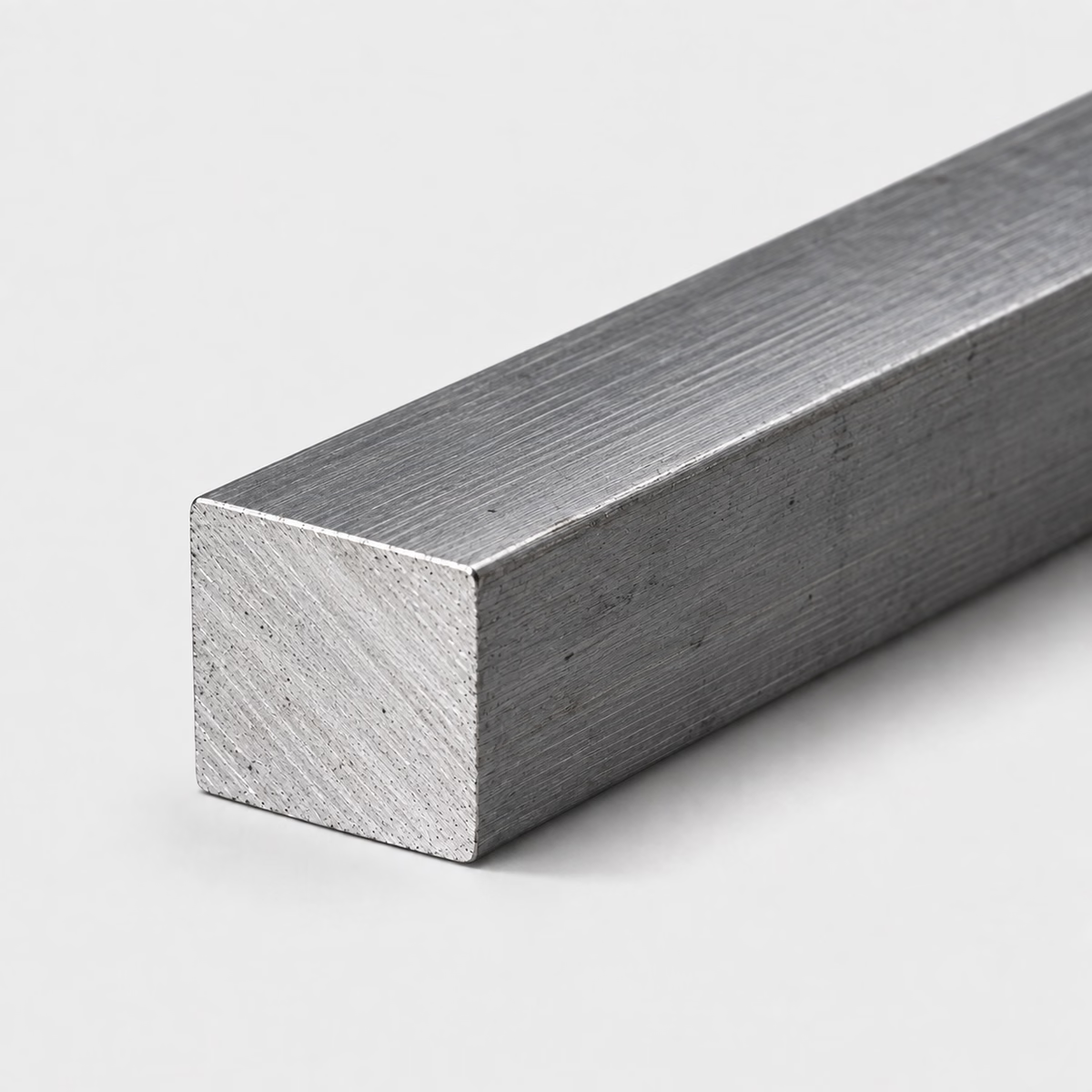
CARBON STEEL / SQUARE BARIllustrative material image
LIVE DIMENSION VIEWSQUARE BAR
Carbon Steel Square Bar
See your specification take shape.
Dimension labels are on. Enter dimensions to see their labels.
MADE FOR YOUR CUT LIST
The right metal. Your exact dimensions.
From a single part to a mixed-material project. Configure each cut, then bring it all together in one reviewed quote.
Custom cut sizesMultiple parts, one requestReviewed specifications
CUT-TO-SIZE METAL
1018 Steel Square Bar
Request solid carbon steel square bar with a 1018 reference. Specify side size, cut length, stock condition and the requirements for machined or fabricated parts.
Attach a PDF, DXF or STEP file. You can request a review without configuring individual pieces.
How your quote works +
Add one or more cuts, share your requirements and tell us where to deliver. We review material, cutting and freight before sending a quote.
Dimensions & material weight +
Dimensions describe your requested section and cut length. Standard sections and feasible cuts are confirmed during review. Include any tolerance in project details. Weight is theoretical, uses ideal section geometry and excludes corner radii, packaging and cutting loss. The preview is a schematic, not a manufacturing drawing.
PROJECT CONTENTS
Your cut list
Cut lines are saved in this browser. Only added pieces are included in your request.
What to include in your request
If the bar is clamped or located on its outside faces, state the important size, straightness and surface limits.
Material
Carbon steel
Profile
Square Bar
Grade references
1018 — confirm grade and condition in the quote
Dimensions
Side size, cut length
Units
Inches or millimeters; decimals or fractions
Supply & cutting
Subject to review; no live-stock or tolerance guarantee
Theoretical geometry only. Actual dimensions, tolerances and cutting require supplier review.
01
A square section has more than one useful envelope
The distance across a square's corners is greater than the distance across its opposite faces. That simple distinction matters when a square blank enters a round opening or is installed diagonally between other parts. A bar can have the correct side dimension and still exceed the available corner clearance. In a machined block, the four faces also offer separate locating choices; the finished interface determines which faces matter, rather than the symmetry of the original square section.
02
Separate edge cleanup from designed features
An unwanted burr, a small handling edge break, and a dimensioned chamfer describe different things. A decorative square post may need a deliberate bevel at its exposed end, while a locating block may depend on material remaining near an edge. Explain the intended feature on the finished drawing instead of using smooth edges for both situations. The purchase specification should also identify which faces remain as supplied and which your shop will finish before assembly.
03
Match surface requirements to the visible result
A square decorative feature can expose four long faces and both ends, while a hidden fixture block may expose only one face. State those differences before specifying finish work. If a later coating or machining step changes the final size, place the acceptance dimensions at the correct stage of the process. Keep packaging requests tied to the faces that need protection so an appearance requirement does not remain an undefined instruction to handle the entire order carefully.
Compare square and rectangular starting forms
Compare square and rectangular starting forms
Catalog option
Geometry
When to compare it
1018 steel square bar
Solid square
The drawing uses equal sides in the starting envelope.
1018 steel flat bar
Solid rectangle
The starting section needs unequal sides.
Carbon steel square tube
Hollow square
The design explicitly calls for a tube and its own specification.
PUT THE DIMENSIONS INTO PRACTICE
Example: a four-piece square bar request
Use this illustrative cut line to see how the fields work. It is a dimensional example, not a stock listing or a recommended section for a particular load.
Side size1 in25.4 mm
Cut length12 in304.8 mm
The side size is 1 in, so the ideal solid cross-section is 1 square inch. A 12 in length contains 12 cubic inches of material. The two section dimensions are equal; the third number is length, not a second side size.
How the theoretical weight is calculated
Cross-sectional area × cut length × reference density = estimated material weight.
Material in this example
Carbon steel
Reference for this example
1018 grade reference
Density used
7,870 kg/m³
One piece, approximately
3.41 lb / 1.55 kg
Four pieces, approximately
13.65 lb / 6.19 kg
Calculated from ideal geometry and a reference density. Actual section, alloy, tolerances, cutting loss and packaging can change the result. This is not a shipping weight or a load rating.
On your own cut list, add a part reference and quantity to each distinct size. Put extra operations such as holes, miters, threads or finish work on the drawing, then keep that drawing reference with the relevant line.
Is 1018 square bar interchangeable with square structural tube?
No. The bar is solid, while tube is hollow and may follow a different specification. Their weight, connections and design behavior differ.
Are the corners of square steel bar perfectly sharp?
The nominal square description does not specify corner geometry. Add a corner-radius or chamfer requirement if the part must fit a pocket.
Does 1018 square bar come with a specified surface condition?
Only the condition confirmed in the quote applies. Include the required finish or stock condition in the request rather than inferring it from the image.
Why can square bar fail to pass through a round opening that matches its side size?
The corners extend farther from the center than the faces do. A round opening must accommodate that corner envelope, not just the distance across two opposite faces. This geometric difference remains even when both the square bar and the opening have correct nominal dimensions.
What is the difference between a square cross-section and a square-cut end?
The cross-section describes the four-sided shape viewed along the bar. A square-cut end describes the end face's orientation relative to the length. One does not establish the other, so a finished block can need separate requirements for its section and its end geometry.
Why can two identical square blanks become left- and right-hand parts?
Features added later can remove the original symmetry. A hole on one face and a slot on an adjacent face establish an orientation that cannot always be reversed in the assembly. The raw material may be identical while the finished feature relationships define distinct components.
Does equal width and height establish the position of a hole in square bar?
No. Equal outside dimensions define the section, not the location of an internal feature. A hole can be centered, deliberately offset, or related to one particular face. Its purpose in the finished assembly determines which of those relationships the drawing needs to control.
How do I specify a square blank that will locate against two faces?
Identify the two locating faces and the reference relationship between them on the finished drawing. State whether those faces will be machined by your shop or must meet a supplied condition. This avoids treating a nominal square section as a complete locating specification.
How can I keep left and right square-bar parts from being mixed?
Use distinct part identifiers and an orientation view showing the finished differences. State where identification can appear on the blank or packaging. If the raw blanks are identical, make the distinction in the manufacturing records rather than expecting the material shape to communicate it.
What dimensions do I need to request 1018 steel square bar?
Provide side size, cut length, plus quantity for each size. Use inches or millimeters consistently. Add the required grade, condition, finish and any critical tolerances; attach a drawing for details the standard fields cannot describe.
Turn your specification into a clear request.
Include the material, dimensions, quantity and critical requirements. Availability, supplied condition, cutting and delivery are confirmed in a reviewed quote.