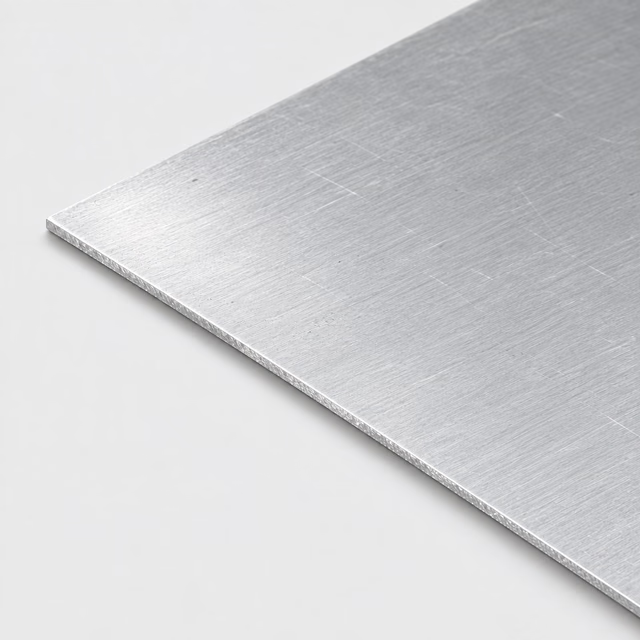
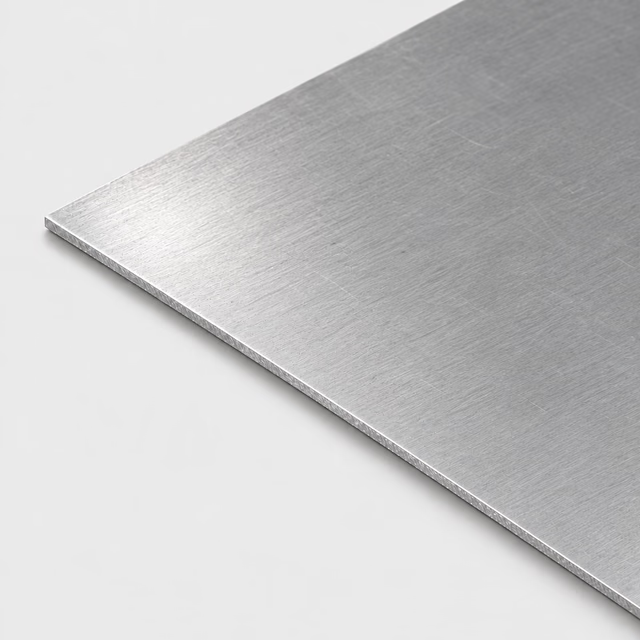
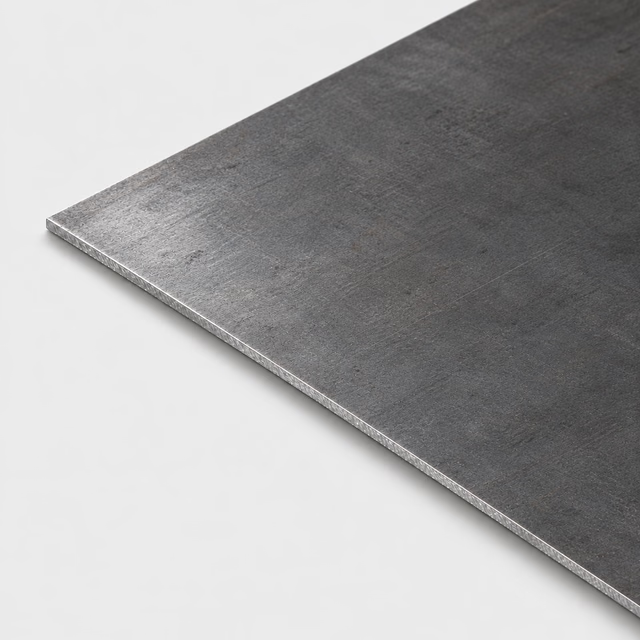
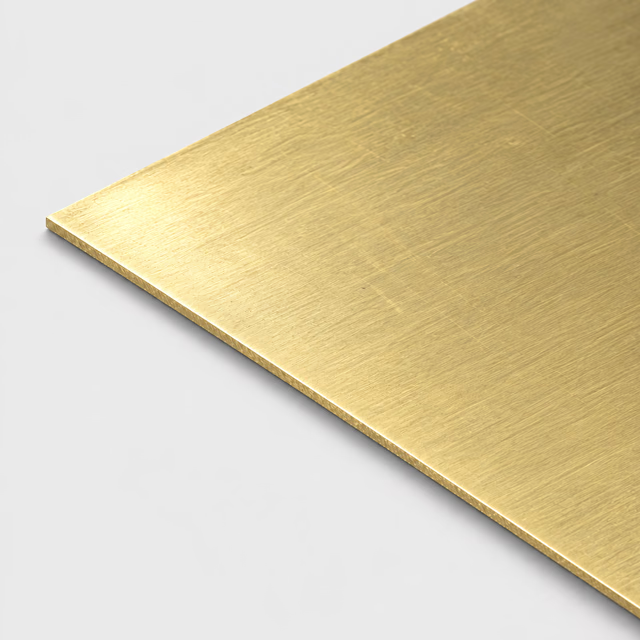
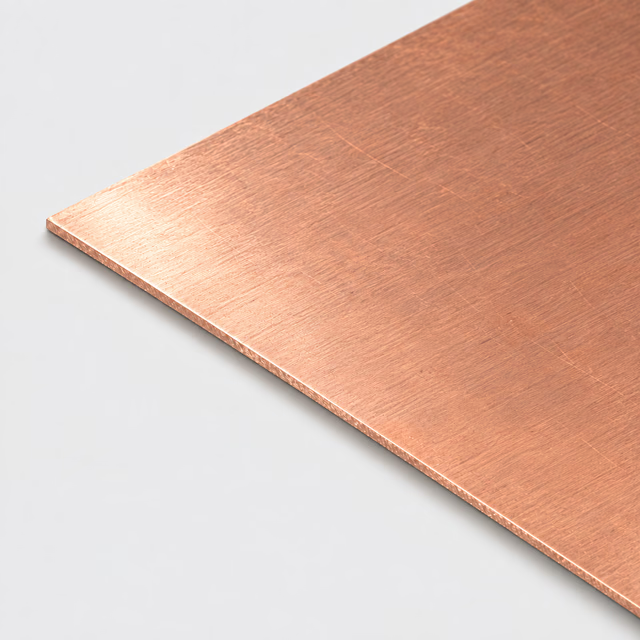
Explore sheet in all five materials. Define the flat blank by thickness, width and length, then add the details that matter for bending, appearance or later fabrication.
This range describes material and profile combinations available to request. It does not represent live stock, confirmed grades, cutting capacity or delivery dates.
A rectangular sheet request describes the raw flat piece. It does not include folded dimensions, holes or an exact developed pattern unless those operations are separately reviewed. For formed work, supply the finished drawing and make clear whether your dimensions describe the blank or the finished part.
Give thickness in inches or millimeters, even when a gauge number appears on the drawing.
State width, length and quantity for each blank.
Identify grain direction, exposed faces and protective film if required.
01
A folded panel starts with a developed blank
The faces of a folded cover cannot simply be added together to establish the flat blank. Material follows a curved path through each bend, so the flat pattern accounts for the bend geometry and fabrication process. Bend allowance and bend deduction are terms used in that development. They explain why a finished outside envelope is different from a cutting instruction. A fabricator-approved flat pattern links the requested sheet rectangle to the part it will become, without guessing at the bend contribution.
02
Treat the visible face as part of the specification
A visible panel needs an appearance brief as well as a size. Identify the exposed face, its orientation and whether neighboring panels should present a consistent direction. Describe the intended finish using a reference or a specific finish requirement rather than the word decorative alone. Note any coating, printing or polishing planned after cutting. This helps separate acceptable handling marks on a concealed surface from marks that would interfere with the finished product, without assuming a particular protection method is included.
03
Edges and holes belong to different operations
A rectangular sheet blank defines an outline and thickness. A hole pattern, slotted opening, hem or folded return adds another manufacturing operation. Those features define the finished component, while the blank dimensions describe its starting footprint; edge treatment is another distinct requirement. Keep the raw blank and finished geometry visible in the project information. This helps compare a simple cut rectangle with a more developed fabrication route on the basis of the work actually needed.
Compare the stages of a sheet part
Compare the stages of a sheet part
Stage or feature
What it means
Practical consequence
Flat blank
The supplied two-dimensional outline
Useful for a flat panel or input to later fabrication
Flat pattern
The developed layout of a formed part
Must account for bends rather than just add outside faces
Visible face
The surface judged in the installed assembly
Texture direction and later finishing affect the result
Protective film
Temporary surface protection
Does not specify the underlying finish or completed appearance
PUT THE DIMENSIONS INTO PRACTICE
Example: a four-piece sheet request
Use this illustrative cut line to see how the fields work. It is a dimensional example, not a stock listing or a recommended section for a particular load.
Thickness0.0625 in1.5875 mm
Width12 in304.8 mm
Length24 in609.6 mm
Here the thickness is 1/16 in (1.5875 mm), the width is 12 in and the length is 24 in. Keep the blank size separate from a folded part’s finished face dimensions. For a nesting layout, the number of blanks that fit also depends on cutting gaps, edge margins and grain direction.
How the theoretical weight is calculated
Cross-sectional area × cut length × reference density = estimated material weight.
Material in this example
Aluminum
Reference for this example
5052 grade reference
Density used
2,680 kg/m³
One piece, approximately
1.74 lb / 0.79 kg
Four pieces, approximately
6.97 lb / 3.16 kg
Calculated from ideal geometry and a reference density. Actual section, alloy, tolerances, cutting loss and packaging can change the result. This is not a shipping weight or a load rating.
On your own cut list, add a part reference and quantity to each distinct size. Put extra operations such as holes, miters, threads or finish work on the drawing, then keep that drawing reference with the relevant line.
No. Gauge references depend on the material and gauge system. An actual thickness in inches or millimeters avoids ambiguity.
Are sheet and plate separated by one universal thickness?
No single boundary is appropriate for every metal and product specification. Use the required thickness and material specification rather than relying on the label alone.
Does ordering sheet include bending or holes?
The dimensional request describes a flat blank. Attach a drawing for bending, holes or shaped outlines, and have the additional work confirmed in the quote.
Why can a small sheet part still require several operations?
Size describes only the part's footprint. A small panel can still need holes, slots, edge work, forming and a visible finish. Compare the complete route to the usable component, rather than treating low material weight as a measure of how much fabrication the finished part requires.
What is the inside bend radius?
It is the radius of the curved surface on the inside of a bend. It differs from the outside radius and affects the developed shape of a formed part. The radius should be considered with material, thickness and the fabrication process, rather than treated as a purely visual corner detail.
Can I specify which sheet face will be visible?
Yes. Mark the exposed face and orientation on the drawing, especially when adjacent panels need a coordinated appearance. Explain what surface condition the final application requires and identify later finishing steps. A face designation communicates the requirement; it does not by itself establish a finish or protective packaging service.
Does protective film make a sheet surface the finished face?
Film is a temporary surface-protection measure, not a finish specification. The underlying material still needs the required texture, appearance and exposed-face designation. If forming, cutting or coating will follow, the process also needs to account for the protection method and when it will be removed.
What should I tell the supplier if the sheet will be bonded later?
Describe the bonding step and identify any surface condition or preparation requirement supplied by the adhesive or fabrication specialist. State whether your shop will perform that preparation. Avoid assuming that a visually clean sheet is ready for a specific bonding process; the receiving workflow should define that acceptance point.
Turn your specification into a clear request.
Include the material, dimensions, quantity and critical requirements. Availability, supplied condition, cutting and delivery are confirmed in a reviewed quote.