Add it to your cut list, or continue with the pieces and files already included.
CUT TO YOUR DIMENSIONS
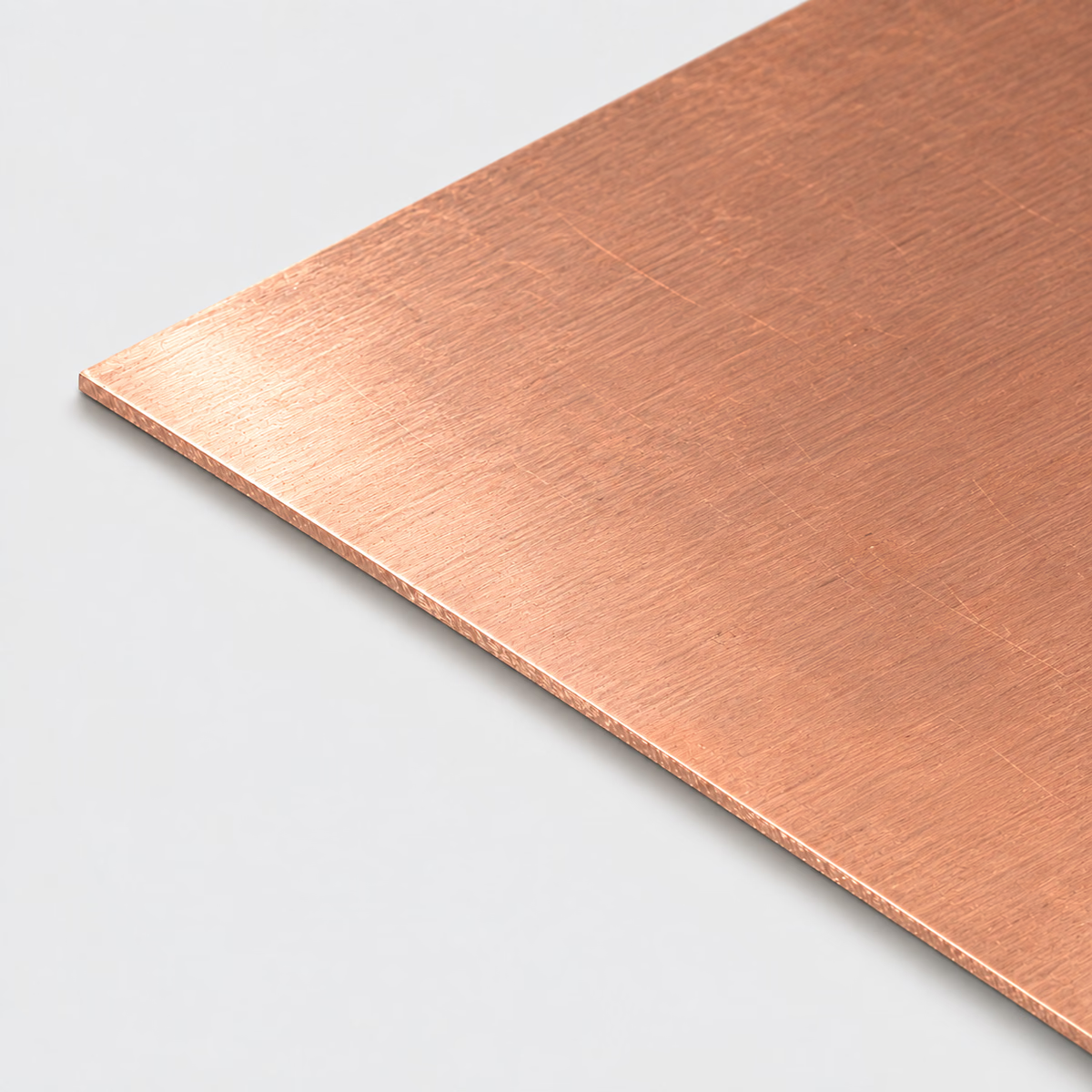
COPPER / SHEETIllustrative material image
LIVE DIMENSION VIEWSHEET
Copper Sheet
See your specification take shape.
Dimension labels are on. Enter dimensions to see their labels.
MADE FOR YOUR CUT LIST
The right metal. Your exact dimensions.
From a single part to a mixed-material project. Configure each cut, then bring it all together in one reviewed quote.
Custom cut sizesMultiple parts, one requestReviewed specifications
CUT-TO-SIZE METAL
C110 Copper Sheet
Request C110 copper sheet by actual thickness and flat blank size. Include condition, visible-face finish and any forming or electrical design requirements.
Attach a PDF, DXF or STEP file. You can request a review without configuring individual pieces.
How your quote works +
Add one or more cuts, share your requirements and tell us where to deliver. We review material, cutting and freight before sending a quote.
Dimensions & material weight +
Dimensions describe your requested section and cut length. Standard sections and feasible cuts are confirmed during review. Include any tolerance in project details. Weight is theoretical, uses ideal section geometry and excludes corner radii, packaging and cutting loss. The preview is a schematic, not a manufacturing drawing.
PROJECT CONTENTS
Your cut list
Cut lines are saved in this browser. Only added pieces are included in your request.
What to include in your request
For visible panels, identify acceptable surface marks, exposed faces and any protective treatment instead of relying on the product photograph.
Material
Copper
Profile
Sheet
Grade references
C110 — confirm grade and condition in the quote
Dimensions
Thickness, width, length
Units
Inches or millimeters; decimals or fractions
Supply & cutting
Subject to review; no live-stock or tolerance guarantee
Theoretical geometry only. Actual dimensions, tolerances and cutting require supplier review.
01
A patina is different from an applied color layer
Exposed copper can develop a weathered surface, while an applied coating places a separate layer over the metal. Those are different ways an installation can acquire its appearance. A protective clear coating also introduces maintenance of the coating itself. For a set of decorative panels, the practical decision is whether the visual reference represents freshly finished copper, a specified surface treatment, or a weathered appearance; the C110 material identity does not answer that appearance question on its own.
02
Connect finish direction to the assembly
When several copper panels sit together, their orientation can be as important to the visual result as the individual finish note. Put direction arrows on the drawings where a directional finish is intended and show the installed layout. Identify where adjoining edges meet and whether the back remains hidden or serves as a bonding face. A shared appearance reference then has a practical meaning: it describes how the pieces should relate once they become one installation.
03
Preserve C110 identity through a mixed-material project
C110 is the copper reference used for this sheet family. Keep that material requirement separate from finish samples, artwork, and attachment details, especially when a project also includes brass or other copper forms. A panel's color is not a reliable purchasing specification for the underlying material. Give each part its own record and link it to the assembly so a decorative choice does not silently replace a functional material requirement during revisions or repeat purchases.
Compare flat copper and brass forms
Compare flat copper and brass forms
Catalog option
Starting form
Selection distinction
C110 copper sheet
Broad flat blank
Panel outline, visible faces, and any developed pattern.
C110 copper flat bar
Rectangular solid strip
A bar-shaped component with its own condition and interface requirements.
C260 brass sheet
Broad flat blank in brass
A deliberate alloy and appearance change.
PUT THE DIMENSIONS INTO PRACTICE
Example: a four-piece sheet request
Use this illustrative cut line to see how the fields work. It is a dimensional example, not a stock listing or a recommended section for a particular load.
Thickness0.0625 in1.5875 mm
Width12 in304.8 mm
Length24 in609.6 mm
Here the thickness is 1/16 in (1.5875 mm), the width is 12 in and the length is 24 in. Keep the blank size separate from a folded part’s finished face dimensions. For a nesting layout, the number of blanks that fit also depends on cutting gaps, edge margins and grain direction.
How the theoretical weight is calculated
Cross-sectional area × cut length × reference density = estimated material weight.
Material in this example
Copper
Reference for this example
C110 grade reference
Density used
8,910 kg/m³
One piece, approximately
5.79 lb / 2.63 kg
Four pieces, approximately
23.18 lb / 10.51 kg
Calculated from ideal geometry and a reference density. Actual section, alloy, tolerances, cutting loss and packaging can change the result. This is not a shipping weight or a load rating.
On your own cut list, add a part reference and quantity to each distinct size. Put extra operations such as holes, miters, threads or finish work on the drawing, then keep that drawing reference with the relevant line.
No. C110 identifies electrolytic tough-pitch copper. If the drawing calls for an oxygen-free grade, request that exact material rather than substituting this reference.
Will copper sheet stay the same bright color as the image?
The image is illustrative. Handling and exposure can change the appearance; specify the delivered finish and any protective treatment when color consistency matters.
How do I request copper sheet for a folded part?
Include thickness, required condition and the finished bend drawing. Clarify whether the width and length describe the raw blank or a finished face.
What does temper describe in copper sheet?
Temper describes the material's processing condition rather than a different panel shape or finish color. Annealing can change the grain structure and resulting properties. The alloy designation and temper therefore provide different information, which matters when the sheet will undergo later forming rather than remain a flat panel.
Why is a folded return different from a separate edge strip?
A return continues the sheet around a bend, while a separate strip creates an additional component and joint. The two arrangements can produce a similar front view but different back geometry, attachment details, and visible seams. Their starting blanks therefore follow different physical constructions.
Can a polished copper face still have an uneven overall shape?
Yes. Surface appearance and the form of the panel are different characteristics. A reflective face does not establish flatness across its extent, and a geometrically acceptable panel can have a different texture. Decorative appearance and physical fit need to be understood as separate aspects of the part.
Why can panel orientation change the appearance of a copper installation?
A directional finish presents its pattern differently when a panel is rotated. Adjacent pieces can therefore look discontinuous even with matching outlines and finish descriptions. Their installed orientation connects the individual surface pattern to the visual arrangement of the complete wall, surround, or decorative set.
Can two visually matching copper panels use different backing arrangements?
Yes, if each panel retains its own attachment and back-face requirements. Show both in the same installed layout and use one visible finish reference. This preserves the appearance relationship while allowing the hidden construction to be documented accurately for each part.
What should I save for a future extension of a copper installation?
Save the material specification, part drawings, installed layout, accepted finish reference, and the relevant revisions. Photograph the existing installation for context, but retain a controlled reference for new work. That gives the extension a documented starting point instead of relying only on a current surface appearance.
What dimensions do I need to request c110 copper sheet?
Provide thickness, width, length, plus quantity for each size. Use inches or millimeters consistently. Add the required grade, condition, finish and any critical tolerances; attach a drawing for details the standard fields cannot describe.
Turn your specification into a clear request.
Include the material, dimensions, quantity and critical requirements. Availability, supplied condition, cutting and delivery are confirmed in a reviewed quote.