Copper stock, with the right specification.
Browse copper sheet, flat bar, round bar and round tube. Sheet and solid bars include a C110 reference; copper tube needs its alloy, dimensions and intended service reviewed separately.
Selection guide & common questions ↓Copper profiles
4 matching products · Open a product to configure your dimensions.
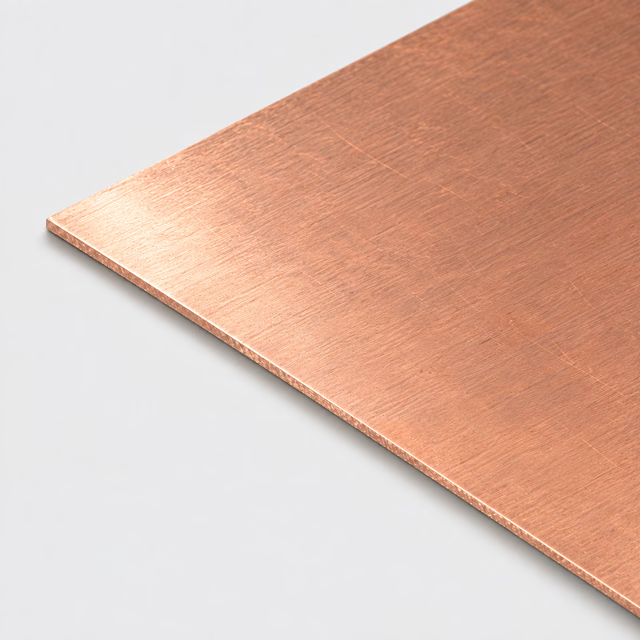 ↗
↗Copper Sheet
C110
Choose dimensions & quantity →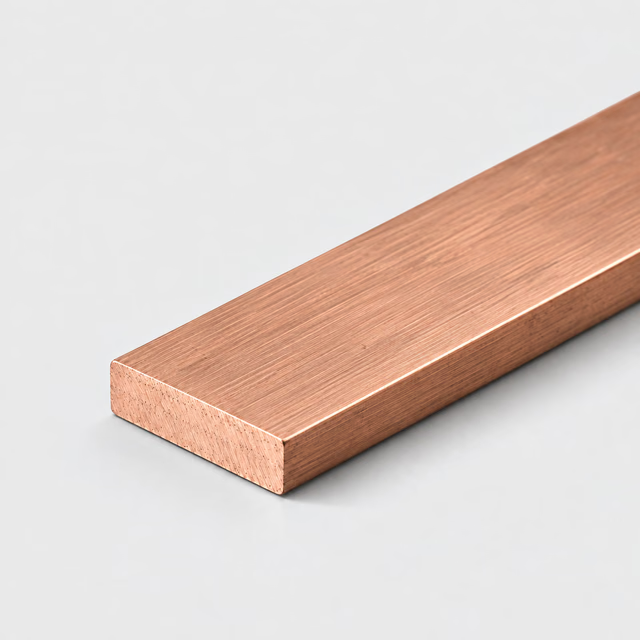 ↗
↗Copper Flat bar
C110
Choose dimensions & quantity →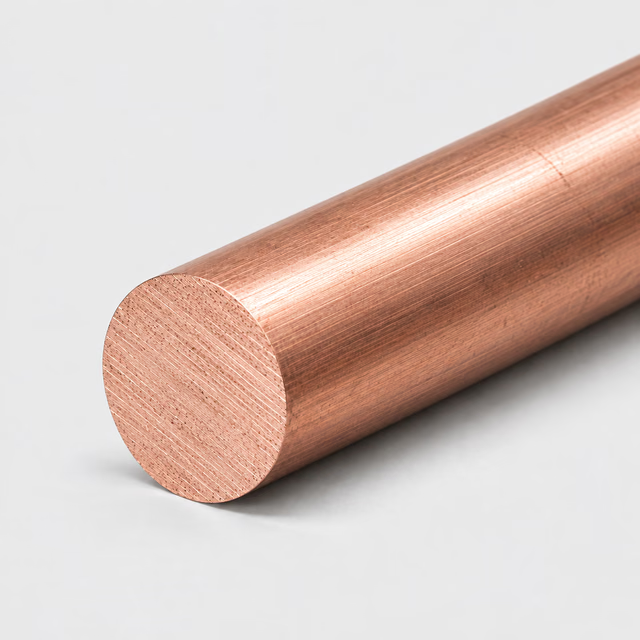 ↗
↗Copper Round bar
C110
Choose dimensions & quantity →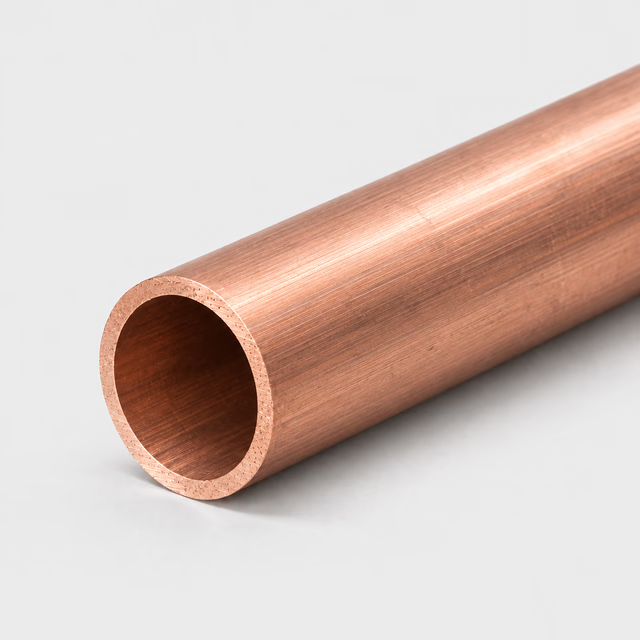 ↗
↗Copper Round tube
Grade to be specified
Choose dimensions & quantity →This range describes material and profile combinations available to request. It does not represent live stock, confirmed grades, cutting capacity or delivery dates.
C110, also designated C11000, is electrolytic tough-pitch copper. It is not an oxygen-free designation. A decorative surface, an electrical component and a tube carrying fluid need different specification details. State the required alloy, condition, finish and documentation instead of treating all copper forms as equivalent.
- Identify C110 or the actual required alloy on the drawing.
- For electrical parts, include the engineered section and connection details.
- For visible sheet, identify exposed faces and finish expectations.
- For tube, state the governing specification and service rather than assuming a plumbing rating.
Conductivity does not make every copper form interchangeable
Copper is often discussed for its electrical and thermal conductivity, but a real component also needs a defined alloy, condition and geometry. A decorative sheet uses those priorities differently from a connecting bar or a tube in a system. C110 is the reference for this catalog's sheet and solid bars; it is not automatically the tube specification. Start with the application's approved material requirement, then choose the form that minimizes unnecessary fabrication while preserving the required interfaces.
Separate connection details from raw bar dimensions
When a copper part will connect to another component, show the actual interface on the drawing. Identify the contact face, hole pattern, later machining and any finishing requirement that affects assembly. The raw width and thickness describe only the starting material. A purchasing brief that includes the connection context helps distinguish a cut blank from a finished connecting component and makes it easier to allocate drilling, surface preparation and inspection to the correct stage of the project.
A living surface and a controlled finish are different choices
A visible copper surface may be intended to change with use, or the design may seek a particular appearance at a defined stage. Those are different maintenance and finishing briefs. A protective treatment, a deliberately developed surface and a freshly prepared finish should not be treated as interchangeable color descriptions. For a wall feature, consider adjoining panels and future cleaning together; for a small handled component, consider the surfaces people will touch. Define the desired result before comparing finishing routes.
Match the copper form to the application
| Listed form | Useful starting discussion | Tradeoff to resolve |
|---|---|---|
| C110 sheet | Flat or subsequently formed visible parts | Condition and final appearance are separate choices |
| C110 flat bar | Rectangular blanks and engineered interfaces | Raw section size does not define the finished connection |
| C110 round bar | Stock for cylindrical machined components | Gripping and machining may require extra usable material |
| Round copper tube | A hollow form for a specified application | Tube alloy and service requirements are separate from C110 bar |
Example: three clearly specified cut lines
Separate profiles and sizes into their own lines. These illustrative blanks show how to organize a request; the dimensions and quantities do not describe a tested assembly or confirmed stock.
| Family | Example dimensions | Pieces |
|---|---|---|
| C110 Copper Sheet | 0.0625 × 12 × 24 in | 4 |
| C110 Copper Flat Bar | 0.25 × 2 × 12 in | 4 |
| Copper Round Tube | Ø 1 × 0.0625 wall × 24 in | 4 |
What makes this a useful request?
Each line identifies a family, describes the requested section and keeps quantity separate from length. Add your part names, drawing references, alloy and condition requirements, plus any critical finish or tolerance. For example, a brushed visible panel and a hidden mounting bar need different finish notes even if they belong to the same project.
If several pieces are to be cut from one stock length, the sum of finished lengths is only the starting point: cutting loss and end preparation also take material. List the finished pieces you need and have the cutting plan checked instead of assuming that equal total lengths produce the same yield.
Questions about copper
Is C110 copper the same as oxygen-free copper?
No. C110 is electrolytic tough-pitch copper. If the project requires oxygen-free copper, name the required grade and request a sourcing review instead of substituting C110.
Can a copper bar size determine its current rating?
Not by itself. Current capacity depends on the system design, temperature limits, installation and connections. The catalog records material dimensions and estimates weight; it does not rate electrical assemblies.
Why does copper change color?
Copper surfaces change with exposure and handling. For a visible part, describe the finish you want at delivery and whether a protective treatment is required; the photograph is not a finish specification.
Why does a copper connecting part need more than a bar size?
The bar dimensions describe the starting stock, while the completed connection also has contact surfaces, fastening geometry and installation requirements. Those features affect what the fabricator must make and inspect. Keep the approved connection drawing separate from the raw blank description so the material order supports the actual assembly.
Does a bright copper surface prove that the material is pure?
No. Brightness describes appearance and can change with surface preparation, coating or handling. It does not identify the alloy or condition. Use the required material designation and appropriate records for identity, then define the visible finish separately if the completed part needs a particular appearance.
Does the C110 reference apply automatically to round copper tube?
No. Treat the tube alloy as a separate requirement and copy the appropriate designation from the application documents. The catalog's sheet and solid bar reference should not be extended to tube without review, especially where the intended service adds product-specific requirements.
Why might a copper part need extra stock for machining?
The shop may need material for gripping, facing or producing the final surfaces. That extra stock belongs to the machining plan, not to the finished drawing's tolerance. Comparing cut blanks with longer stock is most useful when both options account for the same usable parts and required operations.
Can I identify a copper alloy from a photograph of an old part?
A photograph can communicate shape and appearance, but it is not a reliable material identification record. Look for an existing drawing, purchase description or traceable document. If those are unavailable, keep identification as a separate task rather than converting a visual guess into a firm alloy callout.
Turn your specification into a clear request.
Include the material, dimensions, quantity and critical requirements. Availability, supplied condition, cutting and delivery are confirmed in a reviewed quote.
Technical references
Background guidance; these references do not certify the material offered for a particular request.