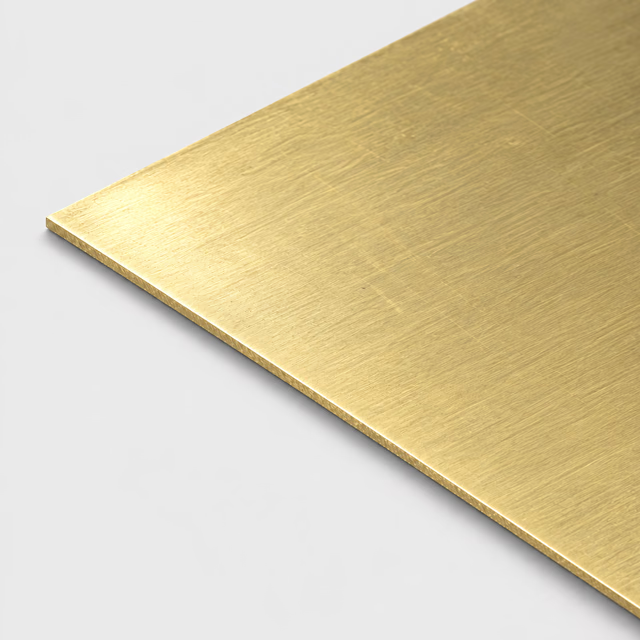
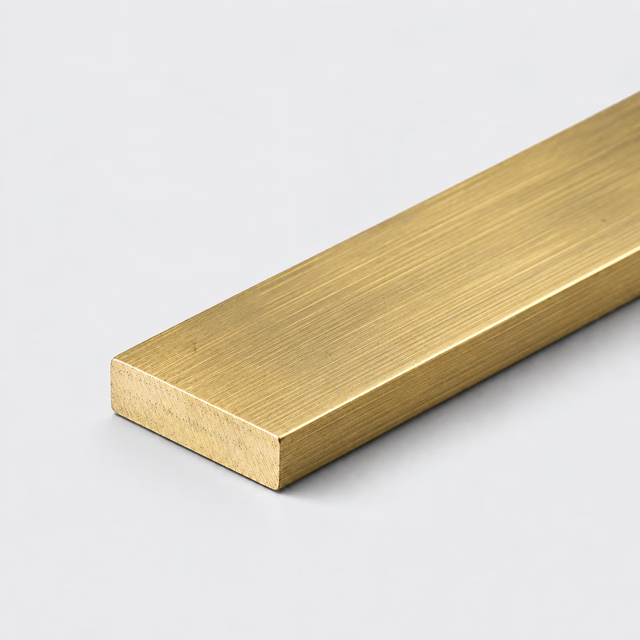
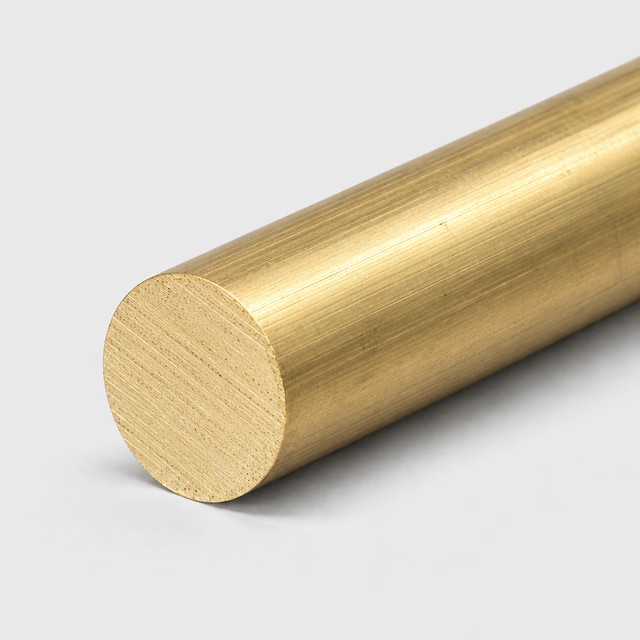
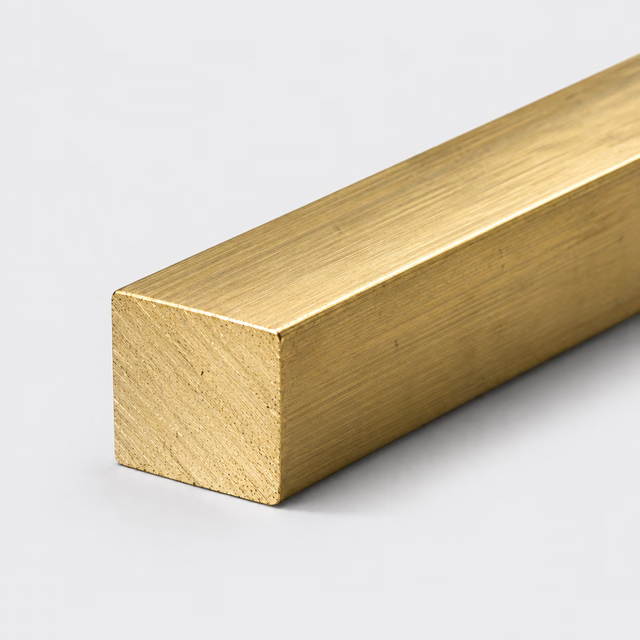
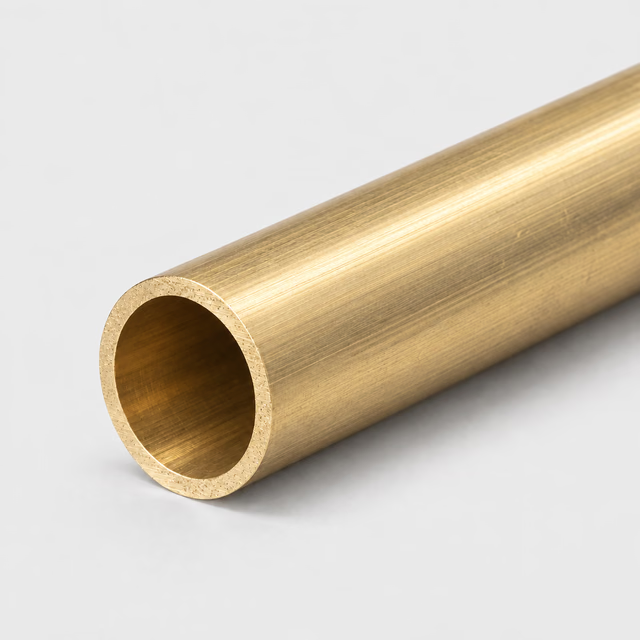
Find brass sheet, flat bar, round bar, square bar and round tube. The sheet family references C260, the solid bars reference C360, and the tube alloy is specified during review.
This range describes material and profile combinations available to request. It does not represent live stock, confirmed grades, cutting capacity or delivery dates.
C260 cartridge brass and C360 free-cutting brass serve different selection needs. C260 is a sheet reference for forming discussions; C360 is associated with machining. C360 is a leaded brass, so a request with lead restrictions needs an explicitly suitable material rather than an assumed substitution. Appearance alone does not identify the alloy.
Separate the alloy from the requested polish or surface color.
State whether the part will be bent, turned, milled or joined.
Flag lead restrictions and application-specific material requirements.
Provide a finish sample or reference when matching existing hardware.
01
Forming and machining ask different things of brass
A formed sheet part needs material that can undergo the intended deformation, while a turned component needs stock suited to material removal. That is why the catalog separates the C260 sheet reference from C360 solid bars rather than presenting one brass grade for every shape. The condition matters too: alloy names alone do not establish how a particular blank will form. For a decorative cover, compare sheet and forming requirements; for a machined knob or spacer, compare the usable bar blank and machining route.
02
Define a finish that can be judged
For visible brass work, identify the faces people will see and the stage at which the finish will be evaluated. A loose polished blank, a handled installation component and a completed assembly are different acceptance points. Supply a reference for color, texture and acceptable variation, especially when new parts must sit beside existing hardware. If a coating or other treatment is part of the design, keep that requirement separate from the alloy so its preparation and application are not left implicit.
03
Temper is a useful forming word
Temper describes the material's processing condition rather than its color or polish. In brass sheet, cold working and annealing are part of how that condition is developed. CDA describes annealing as a route to conditions with improved formability. For the buyer, this means that two sheets with the same alloy designation are not automatically equivalent starting points for a bend or drawn feature. A forming plan needs the relevant condition, while the appearance specification can be considered separately.
Choose the brass route around the process
Choose the brass route around the process
Listed form
Useful starting discussion
Tradeoff to resolve
C260 sheet
Formed panels and sheet details
Alloy and temper both belong in the forming decision
C360 solid bar
Machined blanks and turned components
Machining suitability is not a universal forming recommendation
Round brass tube
A hollow starting section
Its alloy must be specified separately from the bar references
Visible brass assembly
A finish coordinated with adjoining parts
Color matching and alloy identification are different tasks
FROM A PROJECT IDEA TO A CUT LIST
Example: three clearly specified cut lines
Separate profiles and sizes into their own lines. These illustrative blanks show how to organize a request; the dimensions and quantities do not describe a tested assembly or confirmed stock.
Each line identifies a family, describes the requested section and keeps quantity separate from length. Add your part names, drawing references, alloy and condition requirements, plus any critical finish or tolerance. For example, a brushed visible panel and a hidden mounting bar need different finish notes even if they belong to the same project.
If several pieces are to be cut from one stock length, the sum of finished lengths is only the starting point: cutting loss and end preparation also take material. List the finished pieces you need and have the cutting plan checked instead of assuming that equal total lengths produce the same yield.
Do not assume so. They have different compositions and fabrication behavior. Use the alloy required by the drawing and request a substitution review if the desired form is unavailable.
Is C360 brass lead-free?
No. C360 is a leaded free-cutting brass. If the application has lead restrictions, identify the requirement and obtain confirmation of an appropriate material before ordering.
Will brass stay bright without a coating?
The appearance of an unprotected brass surface can change with handling and exposure. If color consistency matters, specify the finish and maintenance expectations along with the material.
How can I match new brass parts to existing hardware?
Provide a physical reference or clear photographs together with an appearance requirement, and identify which existing parts must be matched. Keep alloy identification separate from that visual comparison. An aged or coated surface can be an unreliable guide to the underlying material specification.
Why is free-cutting brass associated with machined parts?
The term points to machining behavior, not to a guarantee that every fabrication process will be easy. C360 is the catalog's solid-bar reference for machining discussions. A part that also needs substantial bending or forming should be evaluated for that operation rather than selected from the machining label alone.
What does annealed mean when discussing brass sheet?
Annealing is a heat-treatment process used to change material condition, including restoring ductility after cold work. It is not a polished finish or a different brass color. For formed sheet, the relevant condition belongs with the alloy and part geometry when discussing whether the planned operation is suitable.
Can I use the C360 bar reference when requesting brass tube?
Keep the tube request separate. The catalog's C360 reference applies to its solid bar families and should not be assumed for round tube. State the alloy required by the tube's application, along with the outside diameter, wall and any governing specification.
Why can plated brass parts need a different dimensional brief?
Plating is an additional layer applied to the surface, so the finished interface may differ from the unfinished blank. A mating component should be dimensioned at the stage that controls its fit. Separate the stock size from the completed-part requirement and let the finishing plan define the necessary preparation.
Turn your specification into a clear request.
Include the material, dimensions, quantity and critical requirements. Availability, supplied condition, cutting and delivery are confirmed in a reviewed quote.