Add it to your cut list, or continue with the pieces and files already included.
CUT TO YOUR DIMENSIONS
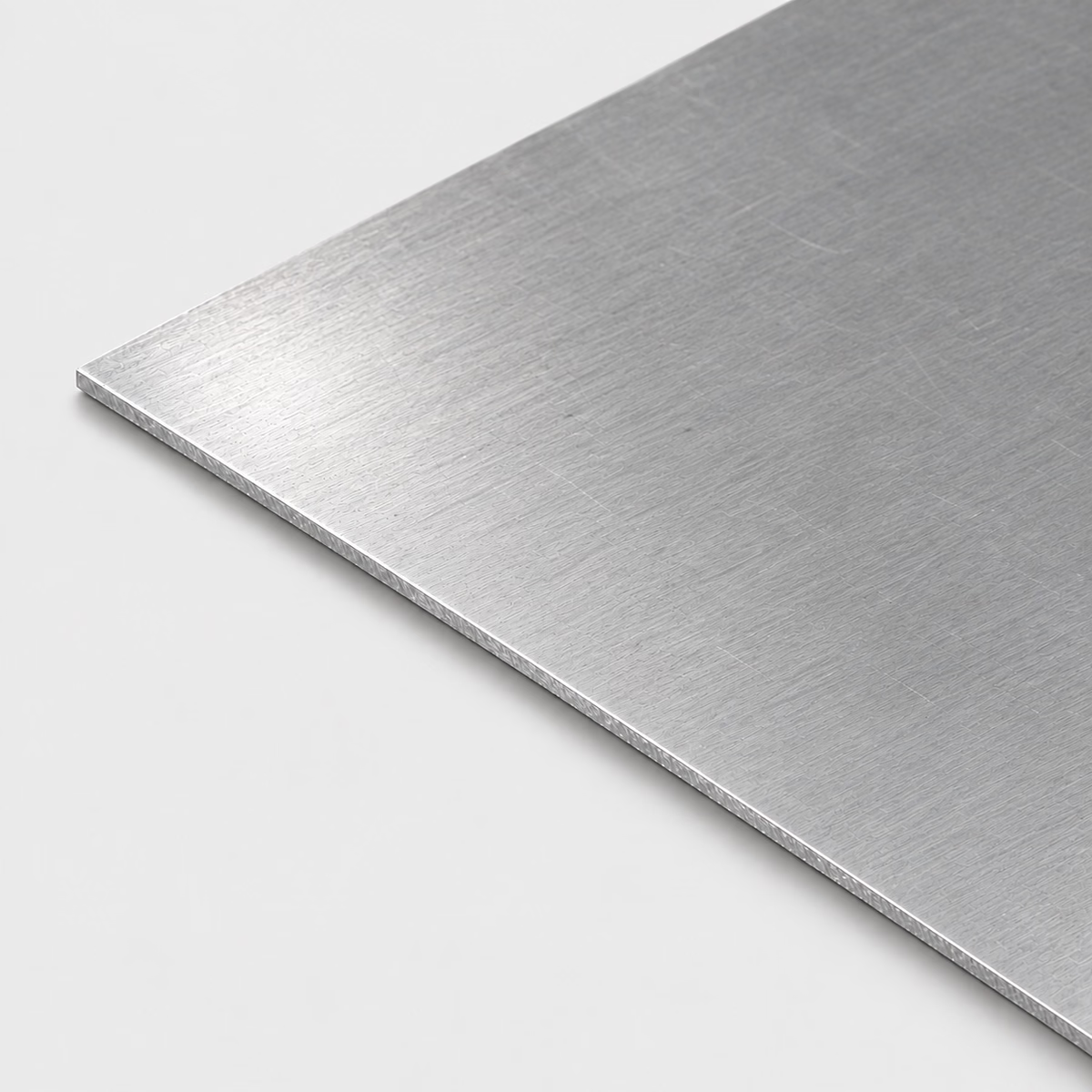
STAINLESS STEEL / SHEETIllustrative material image
LIVE DIMENSION VIEWSHEET
304 Stainless Steel Sheet
See your specification take shape.
Dimension labels are on. Enter dimensions to see their labels.
MADE FOR YOUR CUT LIST
The right metal. Your exact dimensions.
From a single part to a mixed-material project. Configure each cut, then bring it all together in one reviewed quote.
Custom cut sizesMultiple parts, one requestReviewed specifications
CUT-TO-SIZE METAL
304 & 316 Stainless Steel Sheet
Compare 304 and 316 stainless sheet for panels, covers and formed blanks. Specify thickness, flat dimensions, surface finish and grain direction for review.
Attach a PDF, DXF or STEP file. You can request a review without configuring individual pieces.
How your quote works +
Add one or more cuts, share your requirements and tell us where to deliver. We review material, cutting and freight before sending a quote.
Dimensions & material weight +
Dimensions describe your requested section and cut length. Standard sections and feasible cuts are confirmed during review. Include any tolerance in project details. Weight is theoretical, uses ideal section geometry and excludes corner radii, packaging and cutting loss. The preview is a schematic, not a manufacturing drawing.
PROJECT CONTENTS
Your cut list
Cut lines are saved in this browser. Only added pieces are included in your request.
What to include in your request
A grade reference does not specify a brushed, mirror or other finish. Identify the visible face and any protective-film requirement.
Material
Stainless steel
Profile
Sheet
Grade references
304 / 316 — confirm grade and condition in the quote
Dimensions
Thickness, width, length
Units
Inches or millimeters; decimals or fractions
Supply & cutting
Subject to review; no live-stock or tolerance guarantee
Theoretical geometry only. Actual dimensions, tolerances and cutting require supplier review.
01
Think in installed panels, not isolated rectangles
A wall panel, cabinet skin or removable equipment cover is judged in its installed position. The visible face, neighboring panels and cutouts can matter as much as its overall size. For example, rotating one brushed panel in a row changes the direction of its finish even if all blanks have identical dimensions. A panel schedule that connects each part to its installed location helps avoid that mismatch. Openings, folded returns and overlaps belong on the finished drawing because they change how the sheet meets the surrounding assembly.
02
Separate surface finish from edge treatment
A surface finish describes the broad face; it does not fully describe the perimeter. Deburring removes unwanted material left at an edge, a chamfer creates an angled edge face, and a radius creates a rounded transition. These distinctions matter for a cover that is handled regularly or a panel that meets another finished surface. Name the required treatment on the relevant edges, and distinguish the presentation face from concealed areas. Protective film, when requested, is another separate item rather than part of the stainless grade.
03
Choose grade and construction for the actual setting
The choice between 304 and 316 should begin with the project's material requirement and service conditions. Chlorides, temperature, surface condition and joint design can affect stainless corrosion behavior, so outdoor alone is an incomplete description of the exposure. Separately, compare a simple sheet blank with a formed panel or a panel mounted on angle. Those construction choices change attachment access and the visible edges. Keeping grade selection and panel construction as distinct decisions produces a clearer specification than asking for a generally better stainless sheet.
Compare panel material and construction choices
Compare panel material and construction choices
Catalog choice
Useful starting point
Decision to resolve
304 stainless sheet
Panels with an established 304 specification
Face finish and installation details
316 stainless sheet
Panels whose design specifies 316
Exposure and material documentation
Stainless angle with sheet
A panel with a separate edge support
Joints, gaps and fastener access
PUT THE DIMENSIONS INTO PRACTICE
Example: a four-piece sheet request
Use this illustrative cut line to see how the fields work. It is a dimensional example, not a stock listing or a recommended section for a particular load.
Thickness0.0625 in1.5875 mm
Width12 in304.8 mm
Length24 in609.6 mm
Here the thickness is 1/16 in (1.5875 mm), the width is 12 in and the length is 24 in. Keep the blank size separate from a folded part’s finished face dimensions. For a nesting layout, the number of blanks that fit also depends on cutting gaps, edge margins and grain direction.
How the theoretical weight is calculated
Cross-sectional area × cut length × reference density = estimated material weight.
Material in this example
Stainless steel
Reference for this example
304 grade reference
Density used
7,900 kg/m³
One piece, approximately
5.14 lb / 2.33 kg
Four pieces, approximately
20.55 lb / 9.32 kg
Calculated from ideal geometry and a reference density. Actual section, alloy, tolerances, cutting loss and packaging can change the result. This is not a shipping weight or a load rating.
On your own cut list, add a part reference and quantity to each distinct size. Put extra operations such as holes, miters, threads or finish work on the drawing, then keep that drawing reference with the relevant line.
Does 304 stainless sheet include a brushed finish?
No. Grade and finish are separate requirements. State the desired finish, grain direction and visible face, and confirm the surface offered in the quote.
Is 316 always necessary for an outdoor stainless panel?
Selection depends on the actual exposure, including salts, cleaning and crevices. Describe the environment and use the stainless material guide to frame the grade review.
Can I request this sheet as a bent splashback or cover?
Attach the finished drawing with bends, edge details, holes and units. Width and length in the configurator describe the flat blank unless additional fabrication is confirmed.
Why can two brushed panels look different when installed together?
A directional finish has an orientation, so two otherwise similar panels may look different when one is rotated. Lighting and the viewing position also affect the comparison. Mark the installed finish direction and use an agreed reference when the panels form one visible group.
Is deburring the same as rounding every exposed edge?
No. Deburring addresses unwanted edge material; a specified rounded edge has a defined shape. For a frequently handled cover, identify the desired edge treatment and its extent. That gives the fabricator a clearer requirement than relying on a general note saying smooth edges.
Should cutout dimensions be measured from the panel edge or the opening it covers?
Use the drawing's chosen references and show the relationship to the installed opening. A cutout can be correctly positioned within a blank yet misalign with existing equipment if the assembly reference is missing. Include the mating layout when making a replacement panel.
Does protective film replace a surface acceptance requirement?
No. Film is a protection request, while the underlying finish still needs its own description. Identify the protected face and any later cutting or forming steps. For a visible panel group, agree on the finish reference independently of how the sheets are protected during handling.
How should I order left- and right-hand sheet covers?
Treat them as separate parts when cutouts, folds or finish orientation are mirrored. A shared rectangular blank size does not make the finished covers identical. Use matching part numbers on the cut list and drawings so each blank can be assigned to the correct fabrication route.
When is a separate angle frame worth comparing with folded sheet returns?
Compare them when the panel needs removable fasteners, replaceable edges or a different assembly sequence. Separate angles add pieces and joints; folded returns keep more geometry within one formed part. The better choice depends on access and the finished layout, not simply the flat blank size.
What dimensions do I need to request 304 & 316 stainless steel sheet?
Provide thickness, width, length, plus quantity for each size. Use inches or millimeters consistently. Add the required grade, condition, finish and any critical tolerances; attach a drawing for details the standard fields cannot describe.
Turn your specification into a clear request.
Include the material, dimensions, quantity and critical requirements. Availability, supplied condition, cutting and delivery are confirmed in a reviewed quote.