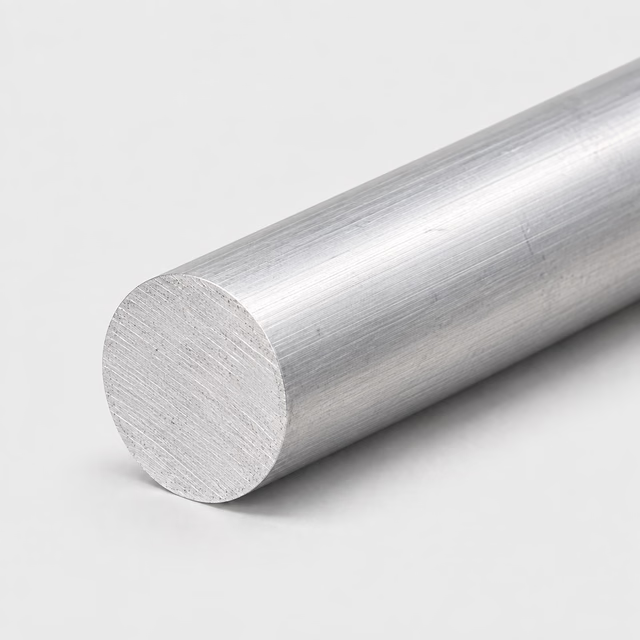
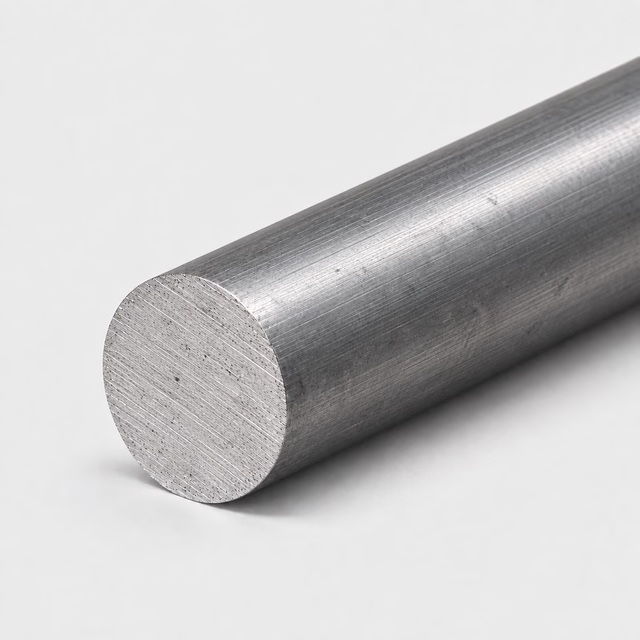
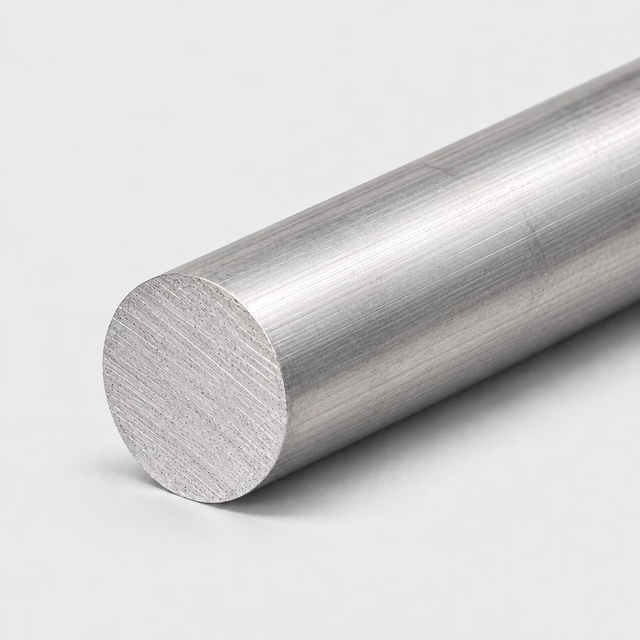
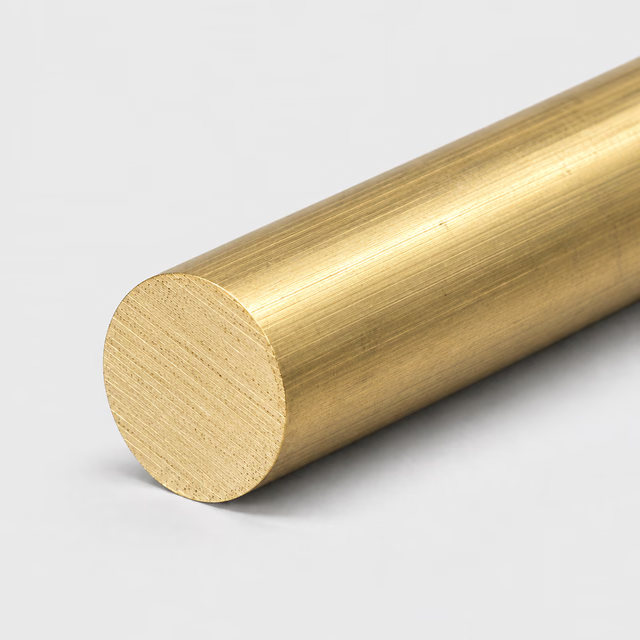
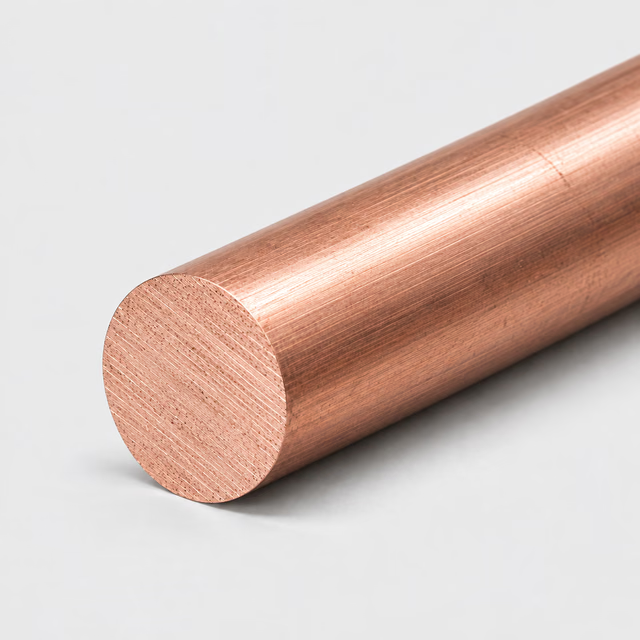
Compare solid round bar in all five materials. Start with the requested stock diameter and cut length, then add any machining allowance or surface requirements.
This range describes material and profile combinations available to request. It does not represent live stock, confirmed grades, cutting capacity or delivery dates.
Round bar provides solid stock for turning and other fabrication. A nominal diameter does not establish bearing fit, straightness, roundness or a ground finish. Put those finished-part requirements on the drawing and identify the raw blank needed for the process.
Specify diameter, cut length and quantity.
Identify raw stock or a finished-size requirement.
For shafts or mating parts, provide tolerances and surface finish.
01
Order for the machining route
Round bar for a turned part should be specified with the machine shop's receiving requirements in mind. A batch of short blanks and a longer piece processed through a shop's own equipment are different purchasing requests, even when they lead to the same finished parts. Ask the machinist to define the stock dimensions, quantity basis and any setup needs. Include the finished drawing as context, but make the supplied bar or blank requirement explicit so the cutting scope remains clear.
02
A turned part begins with a different geometry
Turning removes material from a rotating workpiece to create the required cylindrical features. A finished shaft may have several diameters, shoulders or other features even though its starting bar has one continuous section. The stock diameter must accommodate the largest finished feature and the machining plan, while its length must suit the setup. This is why selecting bar from the smallest or most visible finished diameter can be misleading. The required blank comes from the complete part, not one feature.
03
Surface diameter and surface condition are separate
A diameter tells you the size of the circular section. Surface condition describes the texture and finish of the outside, and straightness describes the path of the bar along its length. A fit or machining operation may depend on more than one of these characteristics. A shiny appearance does not replace dimensional requirements, and a correct diameter does not define a finished shaft. Decide which characteristics matter in the supplied blank and which the next operation will create.
Separate stock geometry from turned features
Separate stock geometry from turned features
Feature
What it describes
Practical consequence
Stock diameter
The incoming continuous circular section
Must accommodate the complete machining plan
Finished diameter
A particular cylindrical feature of the part
May be one of several diameters on the same component
Facing allowance
Extra length for creating the end surface
Belongs to the blank plan rather than finished tolerance
Straightness or surface condition
Characteristics separate from diameter
A correct nominal size is not a complete shaft specification
PUT THE DIMENSIONS INTO PRACTICE
Example: a four-piece round bar request
Use this illustrative cut line to see how the fields work. It is a dimensional example, not a stock listing or a recommended section for a particular load.
Diameter1 in25.4 mm
Cut length12 in304.8 mm
A 1 in diameter solid bar has an ideal cross-sectional area of π/4, approximately 0.7854 square inches. At 12 in long its volume is approximately 9.425 cubic inches. This is solid stock; there is no inside-diameter or wall dimension.
How the theoretical weight is calculated
Cross-sectional area × cut length × reference density = estimated material weight.
Material in this example
Aluminum
Reference for this example
6061 grade reference
Density used
2,700 kg/m³
One piece, approximately
0.92 lb / 0.42 kg
Four pieces, approximately
3.68 lb / 1.67 kg
Calculated from ideal geometry and a reference density. Actual section, alloy, tolerances, cutting loss and packaging can change the result. This is not a shipping weight or a load rating.
On your own cut list, add a part reference and quantity to each distinct size. Put extra operations such as holes, miters, threads or finish work on the drawing, then keep that drawing reference with the relevant line.
What is the difference between round bar and round tube?
Round bar is solid; round tube has a hollow center and requires a wall dimension. Choose according to the actual cross-section.
Is round bar automatically precision ground?
No. A ground diameter and its tolerance must be requested and confirmed. The profile name only describes the general shape.
Should I order the final diameter for a turned part?
Specify the raw stock required by your machining plan. If the diameter needs finishing, identify the necessary allowance rather than assuming nominal bar is ready to fit.
Should I order short round blanks or a longer bar?
Ask the shop performing the next operation which format suits its equipment and workflow. Provide a quote request for the format it actually needs, with a clear quantity basis. Comparing formats is useful only when both options include the same required material and relevant processing scope.
What is facing when machining a round-bar blank?
Facing machines the end surface of the workpiece, usually to establish a controlled face or reach the required finished length. It is a separate operation from cutting the blank. The machining plan should account for it when deciding the stock length needed for the completed part.
Does a shaft drawing describe the bar I should buy?
It describes the finished part, which may differ from the required stock. Have the machining shop define the blank dimensions and receiving requirements, then include the shaft drawing as context. This prevents finished features from being mistaken for operations included in the bar request.
Does a correct round-bar diameter guarantee a straight finished shaft?
Diameter and straightness describe different characteristics, and the finished shaft may require additional machining and inspection. A raw bar's nominal diameter does not establish every requirement of the completed component. Keep the shaft drawing and the shop's receiving-stock specification linked but distinct.
Why might a machinist leave extra length on a round-bar blank?
Extra length can support gripping and end-facing operations before the part reaches its final size. The amount depends on the setup and process plan. It is deliberate stock for later removal, not an instruction to widen the tolerance on the finished shaft or component.
Turn your specification into a clear request.
Include the material, dimensions, quantity and critical requirements. Availability, supplied condition, cutting and delivery are confirmed in a reviewed quote.